
Overview
First published in Sajjana Toṣaṇī (Vol. 9, Issues 10–11) in 1898, this article by Śrīla Bhaktivinoda Ṭhākura opens with a brief biographical account of Śrī Baladeva Vidyābhūṣaṇa, followed by a detailed synopsis of the eight sections of Baladeva’s Siddhānta Ratna, a philosophical treatise expounding the principal doctrines of Gauḍīya Vaiṣṇava theology and philosophy.
translated by Swami Bhaktivijñāna Giri
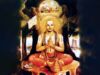
Baladeva Vidyābhūṣaṇa Mahāśaya revealed this commentary on the Vedanta Sūtras as a pīṭhaka, in other words, he composed this book on siddhānta in the form of a throne.* There is no doubt that this has been of particular benefit to the Vaiṣṇavas of the Gauḍīya Madhva sampradāya.
*Translator’s Note: The word pīṭhaka means seat, but also refers to a ‘support.’ Therefore his book, Siddhānta Ratna was a support to his Govinda Bhāṣya commentary on the Vedānta Sūtras. Therefore, the original name of Siddhānta Ratna was the Govinda-bhāṣya-pīṭhaka.
We have not read any account of Baladeva Mahāśaya anywhere, Nothing is written about him in any book. He himself has written many books, among which we have read his commentaries on the Vedānta-sūtra, the Gītā, the Sahasra-nāma, and some Upaniṣads. We have also read Śrī Baladeva’s commentary on Śrī Rūpa Gosvāmī’s Stava-mālā, as well as his commentary on the Tattva Sandarbha. Besides these, we have seen a few small books like the Syamantaka. In none of these books does this great personality provide any particular information about himself. In some places, he only refers to Murāri as his fourth generation preceptor.
At the time when we were engaged in governmental duties in Puruṣottama, we read the Brahma-sūtra commentary written by Śrī Baladeva. Then we asked many elderly scholars about the identity of Baladeva. Some of them only said that Baladeva was born in a Khaṇḍaita dynasty in some region of Orissa.*
*Translator’s Note: Khaṇḍaitas were a community of kṣatriyas in Orissa.
At a young age, he was devoted to travelling to the holy places and the pursuit of knowledge. At some scholarly establishment on the banks of the Chilkā Lake, he was trained in vyākaraṇa (grammar), alaṅkāra (poetics), and other preliminary subjects. Later, he made a special effort to study nyāya-śāstra (logic) and for a long time, he studied all the Vedas. After studying the Vedas, he studied Vedānta in places like Mysore. Initially, he read the commentaries of Śaṅkara and later studied Śrī Madhva’s commentary thoroughly. During that time, he became a disciple of the Tattvavādīs and was initiated into the Madhva sampradaya. Thoroughly conversant with Vedānta, Baladeva became a dig-vijaya paṇḍita (a scholar who conquers all directions) within a short time. In those regions in Dākṣīṇātya (South India) and Āryāvarta (North India) where Vedānta was being studied, he received abundant honour and worship from paṇḍitas and sannyāsīs alike. Since it is believed in India that only brāhmaṇas have the right to propagate dharma, he concealed the identity of his caste and, after accepting Vaiṣṇava sannyāsa, received reverence from all people.
After defeating the scholars of Śrī Purushottama Kṣetra, he resided in a Tattvavādi maṭha. At that time, the Gauḍīya Vaiṣṇavas made efforts to bring such a gem as Baladeva into their own sampradāya. Due to Baladeva’s extensive knowledge and spiritual wisdom, many people left disappointed and so they requested the renowned scholar, Śrī Rādhā-Dāmodara Dāsa, who at that time was the grand-disciple of Murāri, to debate with Baladeva. When he befriended Baladeva, then Baladeva would always remain in his company.
Śrī Rādhā-Dāmodara had studied some of the Vedānta-śāstra. Due to his specific knowledge of the Ṣaṭ Sandarbhas, Baladeva wanted to study that work under him. However, upon hearing that, “Other than someone from the Gauḍīya Mādhva Vaiṣṇava sampradāya, no one else has the right to study that book,” Baladeva felt somewhat disheartened and requested a śāstrika debate with Śrī Rādhā-Dāmodara. Despite being a brāhmaṇa from Kānyakubja, Rādhā-Dāmodara was a Vaiṣṇava with great great prema. Observing his bhakti and prema, Baladeva developed special faith in him. Nonetheless, in the arena of debate, a serious śāstrika battle took place between them and eventually, by the will of Bhagavān, Baladeva was defeated and accepted his discipleship. Even while adhering to his connection with Mādhva, he now came to understand that Śrī Kṛṣṇa Caitanya was directly Bhagavān, and feeling blessed, he regarded himself as fortunate to have joined the Gauḍīya Mādhva sampradāya. Oh! When a Vedic paṇḍita like Baladeva attained kṛṣṇa-prema by the mercy of the guru and became intoxicated by the power of hari-nāma, could he still have any more material pride? Now, having left Śrī Puruṣottama Kṣetra, he took darśana of Śridhāma Navadvīpa and then went to Śrīdhāma Vṛndāvana, where he stayed in a temple.
At that time, there was a commotion in Jaipur. Previously, the kings of Jaipur had been following the Gauḍīya Vaiṣṇava sampradāya, performing the worship of Śrī Govindajī before the worship of Śrī Nārāyaṇa. During this time, several senior Vaiṣṇavas from the Śrī sampradāya came to Jaipur and attempted to establish the custom of worshipping Śrī Nārāyaṇa before that of Sri Kṛṣṇa.* The virtuous king disagreed with this and began to seek competent Vaiṣṇava scholars from Vṛndāvana to debate on Vedānta etc. in regards to this issue. The Vaiṣṇavas of Vṛndāvana, eager to protect the honour of Śrī Govindajī, requested Śrī Viśvanātha Cakravartī Mahāśaya to go to Jaipur. Since Cakravartī Mahāśaya was old, he instructed everyone to find another scholar and they brought Śrī Baladeva. After examining him, Cakravartī Mahāśaya, knowing that Śrī Baladeva was more learned and proficient in the Vedas and Vedānta than himself, sent him to Jaipur.
*Translator’s Note: In actual fact, the Vaiṣṇavas were not from the Śrī sampradāya, but were Rāmānandīs, which are a schism from the line of Rāmānuja. The debate between Baladeva and the Rāmānandīs is said to have took place at Galta, the headquarters of the Rāmānandīs in Rajasthan.
Baladeva, with a kamaṇḍalu in his hand, an old shawl around his neck, and only a kaupīna and outer garment covering his body, appeared alone in the royal assembly and announced the purpose of his visit. Seeing his dress as an akiñcana (a sādhu who has no possessions), the king did not initially regard him as a scholar. Nevertheless, he arranged for him to meet with the Vaiṣṇavas of the Śrī sampradāya. They said, “O best of scholars! Which commentary do you follow?”
Baladeva replied, “I am a follower of Madhva, so I will evaluate based on the commentary authored by Madhva himself.”
They then said, “Only Kṛṣṇa is established in Madhva’s commentary – there is no establishment of Śrī Rādhā. Will Śrī Govindajī accept worship without Śrī Rādhā?”Baladeva could see that Śrī Madhva’s commentary would not suffice. He took a few days respite and sitting in the temple of Śrī Govindadeva, and eventually, on the command of Govindajī, he wrote commentaries on the Sūtras, the Gītā, the Sahasra-nāma, and the Upaniṣads. Later, after deliberating in the assembly, he defeated the Śrī Vaiṣṇavas and maintained the service of Śrī Rādhā-Govinda. In that learned assembly, Baladeva was awarded the title vidyābhūṣana (‘ornament of knowledge’).
Having accomplished that great task, Vidyabhūṣaṇa Mahāśaya came to Śrīdhāma Vṛndāvana and spent the last part of his life serving as the head of the Śrī Śyāmasundara temple. He also wrote other texts during that time. We cannot confirm if the information we have received is accurate. Readers should collect any additional information they find.
Within approximately two hundred years after the appearance of Śrīman Mahāprabhu, Baladeva accomplished that great task. His guru’s param-guru was Śrī Murāri, and Murāri’s guru was Rasikānanda. His guru was Śrī Śyāmānanda, who was known as Duḥkhī Kṛṣṇa Dāsa in his youth. Thus, Baladeva is from the śrī-śyāmananda-parivāra. Śrī Śyāmasundara is the family Deity of that lineage. Vidyabhūṣaṇa Mahāśaya completed his work two hundred years ago. Some very elderly Vaiṣṇavas have told me that their guru had seen Śrī Baladeva.
Vidyabhūṣaṇa Mahāśaya is a special star within the Gauḍīya Vaiṣṇava sampradāya. The extent of his contribution to this sampradāya is unmatched by anyone after the revered Gosvāmīs. This suggests that he is one of the eternal associates of Śrīman Mahāprabhu.
Some Vaiṣṇava texts indicate that Śrī Gopīnātha Miśra, the associate of Śrī Caitanya, who heard a commentary on the sūtras from the mouth of Mahāprabhu in the presence of Sārvabhauma, is actually Brahmā. Thus, Vidyabhūṣaṇa appeared later as the commentator for the Brahma sampradāya. All statements of the Vaiṣṇavas can be true, and this statement is also considered to be true.*
*Translator’s Note: What Śrīla Bhaktivinoda Ṭhākura is inferring here is that Gopīnatha Miśra later became Baladeva Vidyābhūṣaṇa. This is confirmed in his Navadvīpa Dhāma Māhātmya:
kāle yabe bhāṣyera haibe prayojana
śrī-govinda-bhāṣya tabe habe prakaṭana
sārvabhauma samparke sei gopīnātha
śunila prabhura bhāṣya sārvabhauma sātha
kāle teṅha prabhura icchāya janma la’ye
baladevā-veśe yā’be jayapura jaye
At a time when there is a necessity for a commentary, then the Śrī Govinda-bhāṣya will be revealed. This Gopīnātha, who is Sārvabhauma’s relative, heard the Lord’s commentary in the presence of Sārvabhauma. In time, by the desire of the Lord, he will take birth as Baladeva Vidyābhūṣaṇa and conquer Jaipur. (Navadvīpa Dhāma Māhātmya 4.62-64)
Some critics say that there are some slight innovations in Baladeva’s concepts compared to that of the Gosvāmīs. However, we have specifically seen that the views of Śrī Baladeva and Śrī Jīva Gosvāmī are the same, with no differences at all. The only difference is that Baladeva has used more Vedāntika methodologies and terminology in order to maintain the gravity of the commentators. Even so, there is no difference in the opinions. Both have made the same kinds of conclusions regarding the subject of tattva and worship.
In this book, Siddhānta Ratna, Vidyābhūṣaṇa Bābājī Mahāśaya has analysed the process of sambandha, abhidheya and prayojana. I have written briefly about that. In this book, a complete deliberation on philosophical truth (tattva) is divided into eight sections.
In the first section, it is stated that all people are inclined towards avoiding suffering and attaining happiness. To achieve these two goals, Kapila, Patañjali, Kaṇāda, Gautama, and Jaimini have devised various methods, but all of these are flawed. Vedavyāsa, after refuting all these opinions, compiled the Vedānta Sūtra from the veda-śāstra which teaches that the only means for a jīva is experiencing the Supreme Lord and self-realisation. The inherent nature (svarūpa) of that Puruṣa, who is the Controller of all, is knowledge (jñāna) and bliss (ānanda); He possesses all potencies, is inconceivable, transcendental, and beyond logic. In the form of Bhagavān, He is the embodiment of eight divine qualities such as satya-kāma (faultless and pure desires). In His svarūpa there is no distinction between attributes (dharma) and the possessor of attributes (dharmī), nor any internal or external divisions. Yet, due to the power of His acintya-śakti (potency of inconceivability), He manifests attributes. Through the power of the śāstras’ descriptive capacity, He is known in His varied and distinct aspects. He is not designated as the direct cause of actions (karma) for achieving the two aforementioned ultimate goals (self-realisation and experiencing the Supreme Lord). Rather, jñāna and bhakti are recognised as the direct cause of both of them. Realisation of the term tvam (‘you’) is only achieved through nirbheda–jñāna (non-dual knowledge) and within that state, liberation is characterised by kaivalya (oneness). The diverse analysis of the words tat (that Supreme) and tvam leads to knowledge of one’s inherent nature as a devotee. Through bhakti in the form of realisation of the pure meaning of tat, one achieves liberation in the form of sālōkya etc. Through bhakti, which is the realisation of śuddha-sambandha (the pure relationship between the jīva and the Lord), one achieves the supreme goal of serving the Lord’s lotus feet. This bhakti is the combined essence of hlādinī and samvit. It is not simply the bliss of the jīva. That bhakti brings joy to both Bhagavān and the jīva. The sandhinī, samvit, and hlādinī energies are the threefold functions of Bhagavān’s parā-śakti (superior potency). When these begin to manifest within the jīva’s present body, bhakti acts through all the senses in an intrinsic form of pure bliss and unity. Without depending on purification of the mind through karma, many attain mental purity simply by engaging in bhajana with śraddhā in the association of sādhus and thereby achieve direct realisation of Bhagavān. The desire for liberation in the form of sālōkya etc. are secondary, so the desire for them seems trivial. “Kṛṣṇa’s happiness alone is my happiness”- this form of niṣkāma-bhakti (selfless devotion) has no other result other than bhakti. This bhakti comes from the associates of Bhagavān to the present-day devotees like a stream from the Gaṅgā. Bhagavān, whose desires are fully satisfied, accepts the worship of His devotees with affection. Kṛṣṇa’s grace is inconceivable and transcends logic.
In the second section, it is stated that divinity is twofold in terms of mādhurya (sweetness) and aiśvarya (majesty). In terms of that distinction, the jñāna and bhakti of the jīva are also twofold. Despite the manifestation or non-manifestation of parama-aiśvarya (supreme opulence), wherever the human-like pastimes of the Lord are not violated, there is mādhurya. In that regard, aiśvarya-jñāna is said to be a quality which relaxes one’s natural sentiments by creating trembling of the heart and awe. When knowledge of aiśvarya is concealed, mādhurya is nourished. A mādhurya devotee experiences aiśvarya in times of wonder, separation and danger. Both natures (aiśvarya and mādhurya) are qualities of the Supreme. Mādhurya, which the bliss of the Lord’s līlā and the intrinsic nature of the cit-śakti, is non-different from the intrinsic nature of Bhagavān. That intrinsic nature is free from the eighteen defects.* Infinite contradictory qualities of Bhagavān such as amazement, omniscience etc. are subordinate to His param-aiśvarya and constantly expand His pastimes. Bhakti is of two kinds. That which reveals aiśvarya is vidhi-bhakti (regulated devotion). That which reveals mādhurya is ruci-bhakti (a natural inclination towards devotion). Vidhi-bhakti is divided into mixed and pure. Devotees who follow mixed vidhi-bhakti are svaniṣṭha (those who follow the rules of śāstra), and ultimately reach Vaikuṇṭha by the path of light. The pure devotees, owing to their intense longing, are carried to His abode on the shoulders of Garuḍa by the merciful Lord.
*Translator’s Note: The eighteen defects are bewilderment, sleep, error, material attachment without prema, material lust which brings suffering, fickleness, intoxication, envy, violence, exhaustion, toil, lying, anger, hankering, worry, absorption in worldly affairs, prejudice, and dependency on others.
Bhakti characterised by ruci (taste) is imbued with mādhurya and associated with the mood of friendship. Such a devotee enters that abode without any sense of reverential awe. Kṛṣṇa, the Son of Yaśodā, is the friend of the cowherd boys.
Kṛṣṇa, the Supreme Person, is Svayaṁ-Bhagavān, endowed with all potencies. Those forms in which all the potencies are not fully manifest, but only one or two potencies are displayed, are known as vilāsa or aṁśa-kalā forms. Kṛṣṇa is the source of all avatāras, and Nārāyaṇa, the Lord of the spiritual sky, is His vilāsa-mūrti (pastime-form). Kṛṣṇa is the original form, independent of all others.
Four extraordinary qualities are found exclusively in Śrī Kṛṣṇa – His intimate association with the circle of companions who embody His complete potency, headed by Rādhā; the sweetness of His flute-playing, which astonishes all moving and non-moving beings; the sweetness of His beautiful form, which attracts even Himself; and an ocean of supremely wonderful pastimes, manifesting such qualities as unsurpassed compassion. These four qualities are not fully manifest even in Nārāyaṇa and other forms of the Lord.
Rādhikā, the embodiment of prema and the essence of the hlādinī potency, is the supreme potency of Bhagavān. Lakṣmī, Durgā etc. are particular expansions or reflections of Her. Thus, because all sixty-four qualities are fully manifested in Him, Kṛṣṇa alone is the original form of the Lord (svayaṁ-rūpa).
The exceedingly variegated eternal abode of Kṛṣṇa’s pastimes is described in the Vedas as Goloka. Below Goloka is Mathurā, below Mathurā is Dvārakā, below Dvārakā is Vaikuṇṭha, below Vaikuṇṭha is Śiva-dhāma, and below that is Devī-dhāma, which constitutes this material world. Each of these abodes manifests within the material world according to the Lord’s desire, for the purpose of revealing the particular pastimes associated with that abode. Although the manifested abodes are entirely transcendental, to those whose vision is impure, these abodes appear to be part of the material world. Even such a vision, however, is a source of spiritual merit.
Kṛṣṇa’s pastimes are all eternal, encompassing infinite forms, infinite manifestations, infinite pastimes, infinite universes, infinite Vaikuṇṭhas and infinite associates, in an endless variety of individual manifestations. Such realisation does not arise unless one is endowed with devotion to the Lord. In the Lord’s abode, time exists only in the present; there is no past or future. The places, objects, sun, moon and everything else there are likewise transcendental. When the material manifestation is destroyed, its occasional pastimes do not remain; however, the eternal pastimes associated with them are never destroyed.
Bhakti governed by injunctions is known as vidhi-bhakti, while bhakti arising from spiritual taste is known as ruci-bhakti. Both kinds of bhakti indeed bring about the cessation of suffering and the attainment of happiness. Without Kṛṣṇa’s mercy, however, one cannot take to such bhakti. Ruci-bhakti is superior to vidhi-bhakti.
In the third section, it is stated that Bhagavān, who has no equal or superior, possesses transcendental potencies, and is free from the six transformations of material existence, is the Supreme Deity. He is Viṣṇu, the God of all gods and the object of worship for those who aspire for liberation. One should worship Him alone, but one should not show disrespect towards the other Devatās.
There are three types of doctrines that oppose viṣṇu-bhakti:
(1) Sarva-devataikya-vāda (the doctrine that all the gods are one and the same)
(2) Tri-devataikya-vāda (the doctrine that the three principal deities – Brahmā, Viṣṇu and Śiva – are one and the same)
(3) Hari-haraikya-vāda (the doctrine that Viṣṇu and Śiva are one and the same).
By relying upon fragmentary statements of the śāstra, these people obstruct unalloyed viṣṇu-bhakti, thereby misleading others and being misled themselves. When those śāstrika statements are examined together with the statements of other śāstras, it becomes clearly evident that Śrī Viṣṇu alone is the Supreme Deity and the sole object of worship for the jīvas. The other Devas perform their duties as servants of Śrī Viṣṇu. Viṣṇu is their controller.
Therefore, among the three gods, Viṣṇu alone is the Supreme Person who descends by His own will, while the other two are vibhinnāśa-tattva (manifestations of Him), not svāṁśa (His personal expansions). His birth, activities etc. are transcendental, being merely manifestations of His mercy. His pastimes, performed eternally with His various distinct expansions, are eternal.
In the fourth section, the doctrine of kaivalyātmaikya-vāda (the doctrine that the individual self is identical with the impersonal Absolute) is refuted. According to the proponents of kaivalyātmaikya-vāda, the Śruti are divided into two categories – saguṇa (possessing qualities) and nirguṇa (without qualities).
The nirguṇa Śrutis establish Brahman through indirect, secondary interpretation (lakṣaṇā). The saguṇa Śrutis, having expressed Brahman’s conventional conception (vyāvahārika) exist in the form of common descriptions (anuvāda) for establishing the pure consciousness established by the nirguṇa Śrutis.
Such a division of the Śrutis is completely unjustified.
The division made by the ṛṣis, classifying the Śrutis into karma-kāṇḍa and jñāna-kāṇḍa, is beyond reproach. This is because, in reality, the Śrutis belonging to jñāna-kāṇḍa directly indicate Brahman, whereas those belonging to karma-kāṇḍa, as the subsidiary means to spiritual knowledge, indicate Brahman indirectly and progressively. In this connection, dividing the Śrutis belonging to the jñāna-kāṇḍa into the categories of pāramārthika and vyāvahārika is a modern doctrine. There is no indication anywhere in the Vedic statements of such a division.
The saguṇa Vedic statements, which are beyond the reach of pramāṇas such as pratyākṣa (direct perception), establish the Supreme’s transcendental, pāramārthika qualities, while the nirguṇa Śrutis merely negate material qualities. The Supreme Person of the Upaniṣads is described by words. Through bhāga-tyāga-lakṣaṇā (applying a metaphorical meaning to a statement by relinquishing part of a word’s literal meaning or some of its qualifications), the Brahman thus conceived becomes devoid of consciousness.
Do the statements describing the object of contemplation for the sādhaka of nirguṇa as the witness (sākṣī), the untainted (kevala), and the non-differentiated (nirviśeṣa) not also establish qualities? Just as statements describing omniscience and other attributes are ultimately real, so too are statements describing the Lord as the witness etc. The conception of nirguṇa as mere consciousness devoid of distinctions is illusory.
Māyāvāda was born through a gradual weakening of faith in the statements of the Vedas. The pure Reality possesses transcendental names, forms etc, which are not material and are not separate from its essential nature. This is the direct meaning of all the Vedic statements belonging to the jñāna-kāṇḍa. Although Bhagavān cannot be fully expressed in His entirety by words, He is nevertheless described by the Vedas and is distinct from the jīvas and the material manifestation. By knowing Puruṣottama, who is beyond both the kṣara (the perishable) and the akṣara (the imperishable), the jīva attains the fulfilment of life.
In the fifth section, it is shown that Advaitavāda can never be established. If Advaita is said to be something separate from Brahman, then Advaita no longer remains. If it is said to be constituted of Brahman, then siddha-sādhanatā-doṣa (the defect of being a means to an objective already accomplished) arises. Thus, it serves no purpose. Since the svarūpa (intrinsic nature), of the ātmā is eternally established and cannot possibly be covered, then how can ignorance cover its non-duality? The śāstras would lack authority in establishing an object which is unknown. If you say that ignorance exists separately from Brahman, then duality arises. If you say that ignorance does not exist, then there is no necessity for the perfected ātmā to achieve liberation.
“Ignorance is neither real nor unreal.”
Then what is it?
“It is anirvacanīya (indescribable).”
See how the imaginative speculations gradually continue to increase! To establish a false doctrine, one has to keep adding one speculation after another. The very concept of Advaita is false, like a flower in the sky. When the philosophy of Advaita is examined, there is no subject matter, purpose, or qualified person to whom it applies. Consequently, that ideology has no connection with the śāstra. The śāstras are concerned only with that which is real.
In the sixth section, all the arguments of the followers of Advaita are refuted. According to the Vedas, although Brahman is without a second, distinctions are perceived through the differences between the knower, the knowable, knowledge and other such categories. That perception is ultimately real, not false. Non-difference is not the ultimate reality. The result is not the state of becoming Brahman, but the experience of the bliss of Brahman. The śāstras do not teach identity with Brahman. The ātmā is concieved by the ignorant to consist simply of consciousness, but it is a distinct entity possessing the attributes of doer-ship (kartṛtva) and experience (bhoktṛtva). The meanings of the word asmad (‘I’) and yuṣmad (‘you’) associated with the ātmā are not creations of māyā; That distinction is ultimately real. Satya (truth), jñāna (knowledge) and ananta (infinity) are all qualities of Brahman. The Śruti beginning with dvā suparṇā sayujā (‘Two birds, united in companionship’) reveals the ultimately real distinction.*
*Translator’s Note: The verse from Muṇḍaka Upaniṣad (3.1.1) is as follows:
dvā suparṇā sayujā sakhāyā samānaṁ vṛkṣaṁ pariṣasvajāte
tayor anyaḥ pippalaṁ svādv atty anaśnann anyo ‘bhicākaśīti
Two birds (the ātmā and the Paramātmā), who are constant companions and friends, take shelter in the same tree. One of them eats the sweet fruits of the tree, while the other, without eating, simply watches.
The jīva and the material world are not superimposed upon Brahman; rather, they are distinct entities that ultimately have a real relationship with Brahman. The distinction between their respective natures is ultimately real. The form of Brahman described in the Śrutis is not imaginary. The sādhana prescribed by the Advaitavādīs is meaningless.
When examined by means of the six indicators – upakrama (beginning), upasaṁhāra (conclusion), abhyāsa (repetition), apūrvatā phala (unique result), arthavāda (explanatory or eulogistic statements), and upapatti (reasoning) – the distinction that is ultimately real will be seen throughout all the Vedic statements, and the conclusion that Brahman possesses distinguishing attributes will be established.
Because the world is pervaded by Brahman, it is constituted of Brahman. Being grounded in Brahman and being the object of Brahman’s knowledge establishes that it is constituted of Brahman. In the conditioned state of material existence, owing to ignorance, the world is mistakenly perceived as separate from Brahman. Drawing conclusions based on only one section of the śāstra leads to error. A conclusion that is accepted by all the sections does not lead to error. The śāstras have never established that the manifestation of Brahman’s potencies is false. Because the world is subject to birth etc, and is therefore perishable, it may be described as impermanent. Since the world is not false in all three divisions of time (past, present and future), it is real, but dependent upon the Supreme.
That Brahman possesses the potency for creation and other activities is established by the Śruti and Smṛti. Bhagavān, endowed with the six complete opulences of wealth, strength, fame, beauty, knowledge and renunciation, is the Supreme Brahman. All beings exist within Him, and He exists within all beings. He possesses no undesirable qualities whatsoever.
The divinity of Viṣṇu is an established reality, beyond the greatness of others. He is the Instigator of His own will and full of pastimes. He is the Supreme Truth even in relation to the eternally liberated jīvas. Being free from material qualities is either one aspect of His nature or a manifestation of His nature. Ignorance is not dispelled merely by the understanding that everything is Brahman; rather, this is accomplished through surrender to Brahman. The Vedas negate only the existence of material forms. They do not simply negate form. On the contrary, they mention inconceivable, transcendental forms.
Through Vedic statements such as yato vā imāni bhūtāni* (‘from whom, indeed, all these beings arise’), the falsity of the phenomenal world has been refuted. According to the Buddhists, the phenomenal world is false. Therefore, the Smṛti accepts that māyāvāda is covered Buddhism. The Buddhist philosophy of kṣanikavāda (momentariness) is also found in māyāvāda in the form of the dṛṣṭi-sṛṣṭi–vāda (that creation exists only as it is perceived). Māyāvāda is simply a reflection of the Buddhist doctrine of śūnyavāda (voidism). Since the māyāvādī maintains that reality is sad-asat-anirvacanīya (indescribable as either existent or non-existent), he may also be called a friend of the Jains.The philosophy of difference, established by the purport of all the Vedas, is the ultimate truth.
*Translator’s Note: This verse is from Taittirīya Upaniṣad 3.1.
In the seventh section, it is stated that, according to the māyāvādī, the Supreme Truth is knowledge that is one, without a second, real, infinite, devoid of distinctions such as potencies, and free from the three kinds of difference, including difference between things of the same class (svajātīya-bheda). When spoken in the sense of bhāva-vācya (the impersonal passive state), knowledge denotes the non-dual reality with words such as samvit (knowledge), anubhūti (perception) and jñāpti (awareness). If it is formulated in the kāraka-vācya (a construction framed in terms of grammatical relations such as agent and object), then the defect of difference arises. This is utterly ridiculous.
If knowledge is defined as jñāyate anena iti jñānam (‘that by which something is known is knowledge’) does potency not then become an unavoidable obstacle? As soon as potency is admitted, the distinctions between the knowable (jñeya), the knower (jñāta) and knowledge (jñāna) must necessarily follow. Why fear the admission of potency? Potency is infinite, and knowledge is also infinite. The presence of potency does not obscure knowledge.
If it is said that the meaning of aham (‘I’) is dependent upon the gross body, that is not so. Rather, it is the state of being the foundation of the quality of knowledge which constitutes the status of being the knower. Knowledge is an originating attribute of the ātmā. Just as the sun, which is of the nature of illumination, does not become dual by virtue of its capacity to illuminate, so knowledge does not become dual by virtue of its being the knower.* Therefore, Brahman possesses infinite potencies, such as knowledge.
* Translator’s note: In other words, the sun and its power to illuminate do not constitute two separate realities. Similarly, knowledge and its potency to know do not constitute two separate realities.
Then what is anubhūti (perception)? Anubhūti is that which reveals its own foundation through its own existence, or which establishes its own object. Perception devoid of qualities cannot be established. If perception is established, then it is simply a potency. The sense of ‘I’ cannot be said to be non-self. The sense of ‘I’ is grounded in the pure self (śuddhātma). The Śruti statement sukham aham asvāpsam (‘I slept happily’)* acknowledges this kind of knowledge – “I know; I am happy.”
*Translator’s note: This verse is from the Taittirīya Upaniṣad 2.6:
sukham aham asvāpsaṁ na kiñcid avediṣam
I slept happily and was not aware of anything.
Pure ego is a quality inherent in the knower and cannot be ‘non-self.’ Just as the conception of the self as separate from the body is distinct from the body, the false ego (ahaṅkāra) that arises from the Mahat-tattva is material. Therefore, it is distinct from the sense of ‘I’ grounded in pure knowledge. The pure sense of ‘I’ is inseparable from the essential nature of the self. It is not the cause of material bondage; rather, it is that which brings bondage to an end. If material ego alone were the living being’s actual ego, then who would make the effort to attain liberation? If the very person who would attain liberation were to be extinguished by liberation, why would that person listen to teachings about liberation or make any effort to attain it?
Therefore, the ego of one who seeks liberation is grounded in the pure ego (śuddhāhaṅkāra). Analyse the statements of Vāmadeva and others. The distinction between the object and the subject is not concealed by the existence of perception. The self is the perciever; perception is its attribute. That attribute is self-revealing when it manifests an object; at other times, it is apprehended through knowledge.
In the eighth section, it is established that even the sense of doer-ship etc. are inherent in the nature of the knower. The self, denoted by the word aham (‘I’) is of two kinds, namely Īśvara and the jīva. Īśvara is all-pervading (vibhu). Through His own potencies, He is the creator of the world. Through prakṛti (material nature), which is under His control and subject to His will, He is both the efficient cause and the material cause of the world. The material manifestation created by prakṛti and the jīvas is eternally different from Īśvara, who is their foundation.
Brahman, who is non-different from His own inherent nature, is endowed with three superior potencies, and is eternally the cause of the universal creation etc. Thus, the world is ultimately real. It is eternally established in Śrī Kṛṣṇa.
The jīvas are atomic in size and innumerable. They are doers, experiencers, thinkers and knowers, all under the control of Īśvara. All these qualities are eternally present in the jīvas, though only in minute measure. Although the jīva is a particle of consciousness, he is suited to the nature of infinitude. Because of his atomic consciousness, the jīva is a part of Īśvara. The jīva, which emanates from Brahman like a spark, is subordinate to Him. Just as a cintāmaṇi (wish-fulfilling jewel) remains unchanged while producing a mass of gold, Brahman remains eternally unchanged while bringing forth innumerable jīvas as subordinate parts. Therefore, the jīva is eternally distinct from Brahman. The jīva, emanating from Brahman’s marginal potency (taṭasthā-śakti), is non-different from the possessor of that potency. Therefore, the relationship between Īśvara and the jīva is one of inconceivable simultaneous difference and non-difference (Acintya-bhedābheda). This is not the same as the difference and non-difference between cause and effect, and so forth, accepted by other philosophical schools.
The māyāvādī’s definition of marginal characteristics (taṭastha-lakṣaṇa) does not apply in this case.* The perception of Acintya-bhedābheda entails eternal difference. The māyāvādī regards the destruction of the sense of ‘I’ as the ultimate goal of human life. However, this does not establish either the cessation of suffering or the attainment of happiness; it merely amounts to the destruction of the self. The concept of difference between the jīva and Īśvara is established as the conclusion of all śāstras.
* Translator’s note: For the māyāvādīs, marginal characteristics are indirect or incidental features used to identify Brahman, such as Brahman’s role as the cause of the universe, rather than defining Brahman’s essential nature.
The jīva, a part of Brahman, is subdued by māyā as a consequence of turning away from Bhagavān. Through the association of sādhus, the jīva’s aversion to Bhagavān ceases, and the universal māyā is dispelled. Turning towards Bhagavān is His grace, brought about through the association of sādhus. By uninterrupted repetition, the ignorance that is the covering of Bhagavān’s eternal qualities is destroyed. Thereafter, when the ignorance that covers Bhagavān’s own nature is removed, He is directly realised. Mercy alone is the primary cause of attaining Him.
The statements of śāstra that appear to teach non-difference merely indicate that the world is pervaded by Brahman, that it rests upon Brahman, that it is grounded in Brahman, and that it is sustained by Brahman. They do not, in fact, teach absolute non-difference. In some instances, statements of oneness are used to express the unity of a place or the identity of its constituent parts. In other instances, they express that everything is a particular potency of Brahman, or they teach non-difference on the basis of the non-difference between the potency and the Possessor of the potency. There is nothing at all wrong with such statements. Relying on these statements to establish a philosophy of absolute non-difference is simply the gift of ignorance.
Some Vaiṣṇava proponents of philosophical conclusions maintain that the Supreme Truth, in His ultimate reality, encompasses all forms. Therefore, they argue that accepting the conclusions of both Śaṅkara and Madhva as one would show respect to all the Śrutis without diminishing bhakti.
The defect in this position is that, if the phenomenal world is Brahman, there remains no reason for renouncing it. If the world is declared false, this contradicts the Vedas. There is also no reason for compassion towards the jīvas. In this regard, setting aside the philosophy of Bhedābheda, Acintya-bhedābheda alone should be accepted.*
*Translator’s Note: Bhedābheda (‘difference and non-difference’) is a broad Vedāntika philosophy that explains the relationship between Brahman and the world in terms of both unity and distinction. It was propounded by various philosophers such as Bhāskara and Yādava Prakāśa. Although it rejects Śaṅkara’s monistic theory, its approach towards personalism is abstract.
Vidyābhūṣaṇa Mahāśaya, displaying extraordinary Vedic and Vedāntic scholarship and profound insight into the Supreme, first establishes the truth of Bhagavān in this work and demonstrates that Śrī Kṛṣṇa alone is Bhagavān. He then examines how all goals are fulfilled through pure bhakti to Śrī Kṛṣṇa.
That same Bhagavān Śrī Kṛṣṇa manifests wondrous qualities that are both transcendental and seemingly worldly. Although He resides in His own abode, Goloka-dhāma, which is situated above all other abodes, He also expands His transcendental pastimes throughout the material world. Furthermore, at the time of creation, He appoints the Devas, who are manifestations of His own separated expansions (vibhinnāmsa-tattva), to their respective posts as servants invested with specific authorities. He Himself, by His own will, assumes the form of Viṣṇu, the self-manifesting embodiment of pure goodness, and becomes the supreme Deity who maintains the universe. Viṣṇu’s lotus feet, known throughout all the Vedas, are the supreme object of worship.
Showing that it is the duty of all jīvas to worship Śrī Viṣṇu while offering due respect to all other Devatās, he examines the philosophies that are born of ignorance which obstruct exclusive bhakti to Viṣṇu – sarva-daivataikya-vāda (that all deities are one), tri-daivaikya-vāda (that the three principal deities are one), and hari-haraikya-vāda (that Viṣṇu and Śiva are one and the same).
Later, having refuted the erroneous theories of the followers of kevalātmaikavāda (that the ātmā is completely one with the Absolute), Advaitavāda, māyāvāda, and nirguṇa-jñāna-vāda (that knowledge of impersonal Brahman is the goal), which are all mutually supportive of one another and oppose pure bhakti, in the eighth section, he establishes that pure Supreme is the object of worship, the pure jīva is the worshipper, and the nature of liberation has a distinct nature, an thereby propagates the philosophy of pure bhakti.
(‘Siddhānta Ratna, or the Throne of Vedānta ‘was first published in Sajjana Toṣaṇī Vol.9, Issues 10-11, published in 1898 and translated into English by Swami B.V. Giri)





Support the Bhaktivinoda Institute