Aśirvācana (Blessings)
Aśirvācana (Blessings) was first published in Sajjana Toṣaṇī Vol. 2, issue 5 in 1885. In this article, Bhaktivinoda Ṭhākura laments the fact that there is animosity between the Indians and the British, and writes about the common factors they both share. He compares the two communities to an elder brother and a younger brother, and hopes that they can cultivate mutual respect for each other.
Itāuyā Yamunā-tīra (Etawah on the Banks of the Yamunā)
Itāuyā Yamunā-tīra (Etawah on the Banks of the Yamunā) was first published in Sajjana Toṣaṇī Vol.4. issue 3 in 1892. In this article Bhaktivinoda Ṭhākura describes a visit to the city of Etawah in modern day Uttar Pradesh.
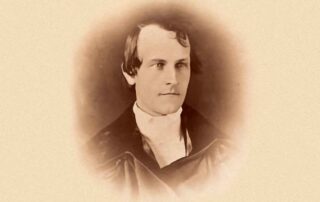
The Dharma of Charity and Padre Dall Saheb (Dāna Dharma u Pādrī Dāl Saheb)
In this article, Dāna Dharma u Pādrī Dāl Saheb (The Dharma of Charity and Padre Dall Saheb), from Sajjana Toṣaṇī, Vol.1, Śrīla Bhaktivinoda Ṭhākura discusses a speech made by Charles Henry Appleton Dall (1816–1886) on the subject of charity in India, and he explains how Dall’s statements are ‘unscientific’ and mistaken. Dall was the first American Unitarian missionary in Calcutta and stayed in India for 31 years until he passed away. He was well-known to Bhaktivinoda Ṭhākura who was, for a while, part of his church congregation. Bhaktivinoda met daily with Dall and they had many discussions on religion and philosophy together. Under the direction of Dall, Bhaktivinoda studied the Bible and Unitarian works. Dall had hoped to convert the young Bhaktivinoda to Christianity, but their talks on theology eventually gave more of an impetus to Bhaktivinoda to study the path of bhakti.
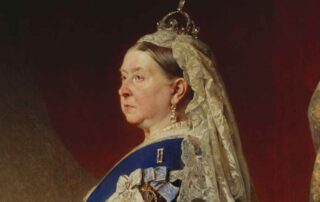
Maṅgalācaraṇa
In this short editorial entitled 'Maṅgalācaraṇa' from Sajjana Toṣaṇī, Vol.4, issue 1, Bhaktivinoda Ṭhākura invokes the blessings of Mahāprabhu and the Vaiṣṇavas, and prays for the good health of Queen Victoria, the ruler of India, so that the devotees can continue to relish and propagate pure Vaiṣṇava dharma.
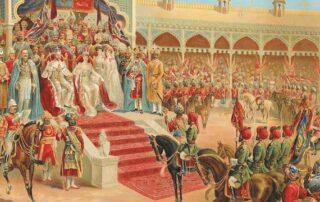
British Rule and the Vaiṣṇavas (Britis-rājya u Vaiṣṇava-vṛnda)
Britis-rājya u Vaiṣṇava-vṛnda (British Rule and the Vaiṣṇavas) was published in the first edition of Sajjana Toṣaṇī, Vol. 1 Issue 1 in 1881. Herein, Bhaktivinoda Ṭhākura praises British rule in India as favorable for Vaiṣnavas as compared to previous regimes.
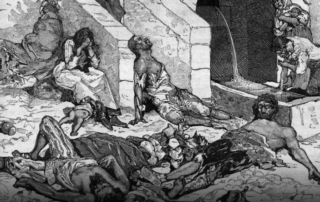
The Worldly Difficulties of a Vaiṣṇava (Vaiṣṇavera Vyavahāra Duḥkha)
This short article, Vaiṣṇavera Vyavahāra Duḥkha (The Worldly Difficulties of a Vaiṣṇava) was published in the 10th Volume, 2nd Issue of Sajjana Toṣaṇī in 1898. Herein, Bhaktivinoda Ṭhākura explains the difference between the difficulties encountered by a Vaiṣṇava and those of a non-Vaiṣṇava. Towards the end of the article he speaks about the Bubonic Plague which broke out at the end of 1897 and was still a huge threat in Kolkata at the time of writing.
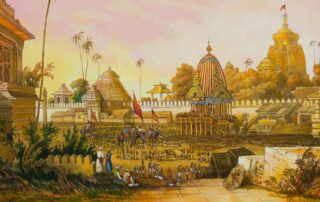
The Temple of Jagannath at Puri
An English essay written in 1871 (The Temple of Jagannath at Puri) describes the history of the establishment of the great temple in Purī, Orissa. This piece also addresses the hypocrisy of temple priests as opposed to sincere devotional worship in pure love of God.
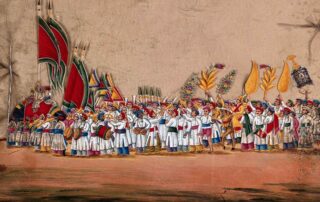
The Marriage System of Bengal
The Marriage System of Bengal is an English article written in 1871 explaining Hindu marriage customs and their deplorable forms. The Ṭhākura gives historical outlines of various types of traditional marriages, and expresses sympathy for the women subjected to the inhumane marital practices of certain groups in Bengal.
 On 18th August 2012, on the occasion of his Vyāsa Pūjā, Śrīla Bhakti Gaurava Narasiṅgha Mahārāja announced to the devotees that he had a strong desire to create a website called “Bhaktivinoda Institute” in honour of Śrīla Bhaktivinoda Ṭhākura and his teachings in order to preserve and propagate them.