
The Worldly Difficulties of a Vaiṣṇava (Vaiṣṇavera Vyavahāra Duḥkha)
This short article, Vaiṣṇavera Vyavahāra Duḥkha (The Worldly Difficulties of a Vaiṣṇava) was published in the 10th Volume, 2nd Issue of Sajjana Toṣaṇī in 1898. Herein, Bhaktivinoda Ṭhākura explains the difference between the difficulties encountered by a Vaiṣṇava and those of a non-Vaiṣṇava. Towards the end of the article he speaks about the Bubonic Plague which broke out at the end of 1897 and was still a huge threat in Kolkata at the time of writing.
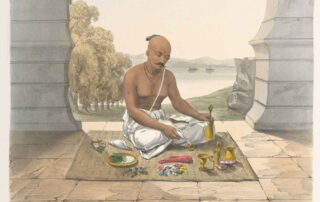
Brāhmaṇatva o Vaiṣṇavatva (Brāhmaṇism and Vaiṣṇavism)
In this article, "Brāhmaṇatva o Vaiṣṇavatva (Brāhmaṇism and Vaiṣṇavism)", from Sajjana Toṣaṇī Vol. 4, Bhaktivinoda Ṭhākura explains the unique relationship between Brāhmanism and Vaiṣṇavism, and how these two things are interdependent.

Sādhu-vṛtti (Following in the footsteps of the previous ācāryas)
Sādhu-vṛtti (Following in the footsteps of the previous ācāryas) is imperative in bhakti. In this article from Vol.10 of Sajjana Toṣaṇī, Bhaktivinoda Ṭhākura describes the two types of sādhus - the householders and the renunciants - and the qualities that they should cultivate.
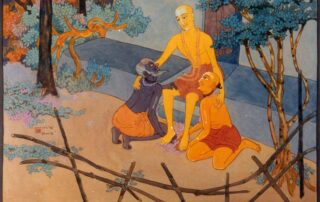
Sad-guṇa and Bhakti
Sad-guṇa and Bhakti was first published in 1893, in Volume 5 of Sajjana Toṣaṇī, this article describes the many auspicious qualities found in the personality of a Vaiṣṇava, and Bhaktivinoda Ṭhākura points out how all such qualities naturally appear wherever bhakti is found.
 On 18th August 2012, on the occasion of his Vyāsa Pūjā, Śrīla Bhakti Gaurava Narasiṅgha Mahārāja announced to the devotees that he had a strong desire to create a website called “Bhaktivinoda Institute” in honour of Śrīla Bhaktivinoda Ṭhākura and his teachings in order to preserve and propagate them.