Śrī Kṛṣṇacandra
'Śrī Kṛṣṇacandra' is a rare Bengali song written by Bhaktivinoda Ṭhākura in Purī in 1871. This was unpublished during the Ṭhākura's lifetime and was first published in The Gauḍīya, 18th Vol. July, 1940.
A Question and Answer Concerning Śrī Kṛṣṇa Saṁhitā (Praśnottara)
Praśnottara (A Question and Answer Concerning Śrī Kṛṣṇa Saṁhitā) is an undated article by Bhaktivinoda Ṭhākura which was republished in the 18th volume of the Gauḍīya Magazine in 1939. Bhaktivinoda Ṭhākura answers a question concerning the Bhāgavatam’s narration of kṛṣṇa-līlā, as found in his work, Śrī Kṛṣṇa Saṁhitā.
Impersonal Spirituality and Transcendental Spirituality (Ādhyātmika u Aprākṛta)
Ādhyātmika u Aprākṛta (Impersonal Spirituality and Transcendental Spirituality) was originally published as ‘samālocanā (A Book Review) in Sajjana Toṣaṇī, Vol. 8 issue 7 in 1896. Herein, Bhaktivinoda Ṭhākura reviews a small book that tries to give rational explanations for Kṛṣṇa’s aprākṛta-līlā.
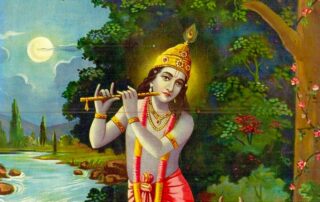
Identifying the Supreme Object (Vastu Nirdeśa)
Vastu Nirdeśa (Identifying the Supreme Object) was first published in Sajjana Toṣaṇī, Vol.2 issue 6 in 1885. This article is in answer to one gentleman inquiring about the position of Brahman, Paramātmā and Bhagavān, wishing to know the ‘Vedāntic siddhānta.’ In response, Bhaktivinoda Ṭhākura gives a detailed answer.
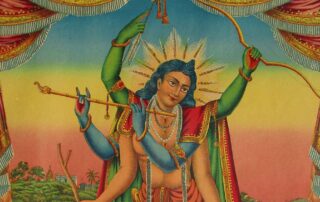
The Non-Difference Between Śrī Gaura and Kṛṣna (Śrī Gaura Kṛṣṇa Abheda)
Śrī Gaura Kṛṣṇa Abheda (The Non-Difference Between Śrī Gaura and Kṛṣna) was written by Bhaktivinoda Ṭhākura for Sajjana Toṣaṇī, Vol.11, issue 6 in 1899. In this article, Śrīla Bhaktivinoda Ṭhākura describes how Gaurāṅga and Kṛṣṇa are identical, and how one cannot simply worship Gaura and reject Kṛṣṇa as some persons were doing at the time.
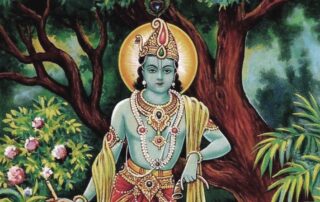
Kṛṣṇa-dāsya (Servitorship to Kṛṣṇa)
This article, Kṛṣṇa-dāsya (Servitorship to Kṛṣṇa) was written by Bhaktivinoda Ṭhākura for Sajjana Toṣaṇī, Vol.11, issue 6 in 1899. Śrīla Bhaktivinoda Ṭhākura explains the process how one can attain true kṛṣṇa-dāsya by avoiding nāmāparādha and by taking shelter of a genuine guru.

Prīti (Love)
In this essay, Prīti (Love) first published in 1896 in the 8th Volume of Sajjana Toṣaṇī, Ṭhākura Bhaktivinoda states that love is the sole purpose of human life, but further explains what real love actually is.
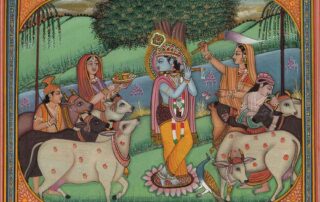
The Glories of Puruṣottama Māsa (Puruṣottama Māsa Māhātmya)
In this article "Puruṣottama Māsa Māhātmya (The Glories of Puruṣottama Māsa)", Ṭhākura Bhaktivinoda describes the glories of the holy month of Puruṣottama according to the śāstras, how to observe it and the true goal in following it.
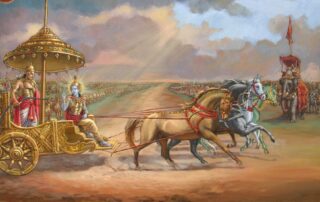
The Secret of the Lord’s Appearance According to the Gītā (Gītāra Janma Rahasya)
In Gītāra Janma Rahasya (The Secret of the Lord's Appearance According to the Gītā), Ṭhākura Bhaktivinoda explains the transcendental position of Śrī Kṛṣṇa based on the Fourth Chapter of the Bhagavad-gītā.
 On 18th August 2012, on the occasion of his Vyāsa Pūjā, Śrīla Bhakti Gaurava Narasiṅgha Mahārāja announced to the devotees that he had a strong desire to create a website called “Bhaktivinoda Institute” in honour of Śrīla Bhaktivinoda Ṭhākura and his teachings in order to preserve and propagate them.